
Embossing Stamp vs Ink: Which Fits Best?
Embossing Stamp vs Ink: Which Fits Best?
A certificate on thick paper, a contract that needs a formal mark, a luxury box sleeve, a wedding card, a bakery tag – each calls for a different kind of impression. When customers ask about embossing stamp vs ink, they are usually not choosing between two tools that do the same job. They are deciding what kind of message the mark should send: official, elegant, practical, fast, or brand-forward.
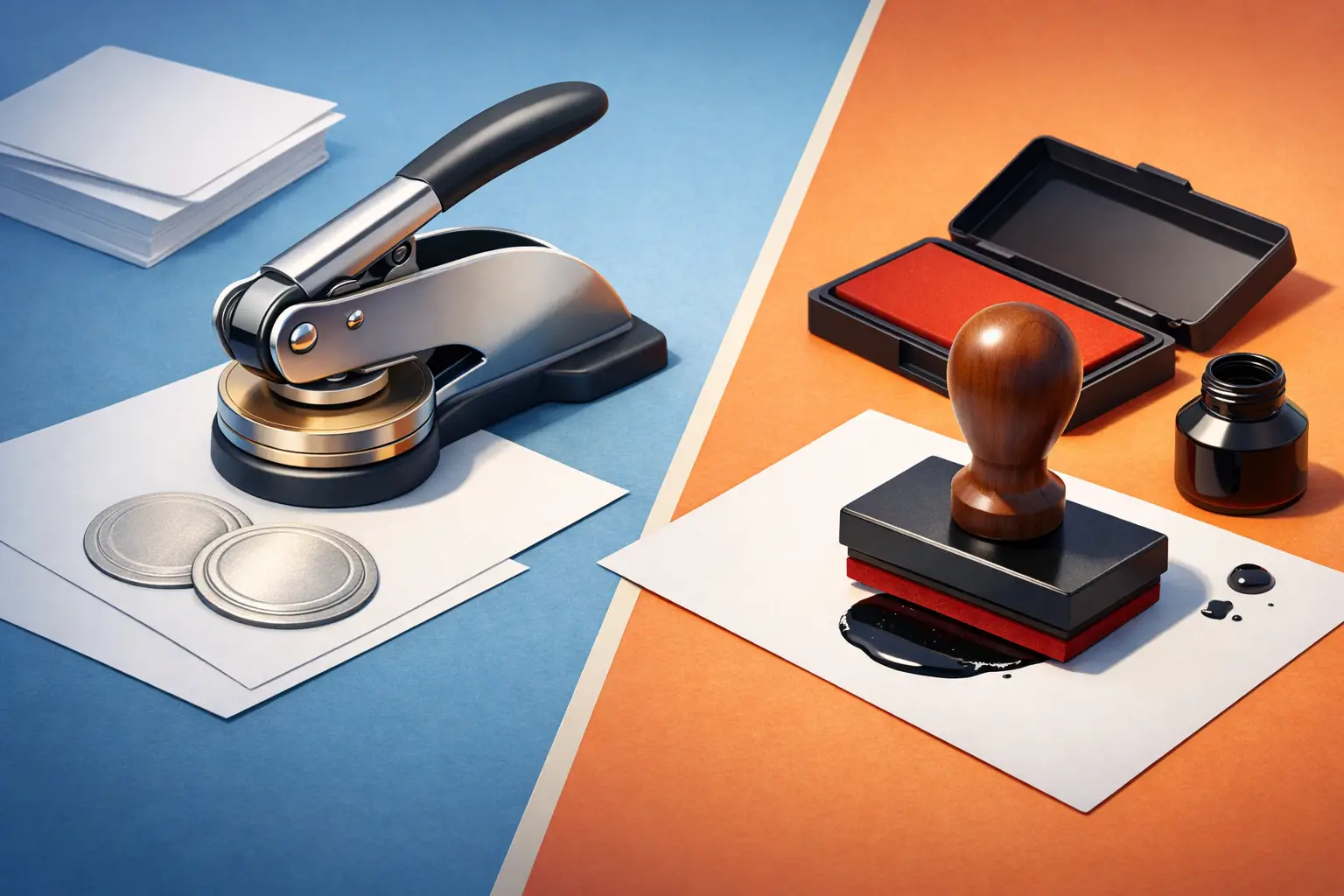
That distinction matters because the right choice depends less on trend and more on use case. An ink stamp is built for speed, repetition, and clarity on everyday materials. An embossing stamp creates a raised impression without ink, adding texture and a more premium, formal finish. Both are useful. The better option comes down to where it will be used, how often, and what the impression needs to achieve.
Embossing stamp vs ink for everyday business use
For most offices, ink wins on pure efficiency. If your team stamps invoices, approvals, received documents, copies, or routine paperwork all day, a self-inking or pre-inked stamp is the practical choice. It is fast, easy to repeat, and highly visible on standard paper. You get a clear company name, date, department title, or approval mark in seconds.
Embossing stamps serve a different purpose in business settings. They are often chosen for certificates, legal-style presentation documents, notarial-style use where allowed, corporate folders, and paperwork that benefits from a refined, tamper-resistant appearance. A raised seal looks more formal than standard ink, and it gives documents a stronger sense of authority.
That said, embossing is slower. It also requires the right paper weight and good positioning. If your admin team needs to process stacks of documents quickly, an embosser alone may feel inefficient. In many cases, businesses keep both – ink for daily operations, embossing for presentation and selective formal use.
How the finished impression actually looks
This is where the difference becomes obvious.
An ink stamp produces a printed mark. It can be bold, dark, and easy to read from a distance. If your priority is legibility, especially for text-heavy impressions, ink usually performs better. This is why company stamps, address stamps, paid stamps, and bilingual office stamps are commonly made as self-inking or pre-inked models.
An embossing stamp creates a raised or recessed impression in the paper. It has no ink unless you add foil or a separate finishing process. The effect is more tactile and understated. It catches light, adds depth, and feels premium in hand. For branding, luxury stationery, certificates, and premium packaging inserts, that texture can say more than a colored mark.
The trade-off is visibility. On some paper stocks and in some lighting, an embossed seal can be subtler than expected. If the mark needs to be instantly obvious, ink is more direct. If the goal is elegance and sophistication, embossing has the advantage.
When embossing stamps make more sense
Embossers are best when the impression itself is part of the presentation. Think corporate seals on official-looking paper, monograms on letterheads, architect or designer stationery, premium invitations, and boutique brand packaging. They are also popular for law firms, consultants, schools, and organizations that want a seal-like finish rather than a standard office stamp.
For creative businesses, embossing works especially well on paper goods. Wedding stationery, gift cards, garment tags, certificate folders, book plates, and branded inserts benefit from a raised mark that feels custom and high-end. It is also useful when you want a clean result without adding ink color to the design.
Still, embossing is material-sensitive. Thin paper can tear or warp. Very thick stock may require more pressure or a stronger tool. If your application changes from one substrate to another, it is worth checking compatibility before ordering.
When ink stamps are the better investment
Ink stamps are the workhorses. They are ideal for office paperwork, warehouse control, retail operations, back-office processing, and any task where speed matters. They are also better for detailed text, dates, signatures, inspection marks, and repetitive stamping across large volumes.
For product-based brands, ink can also be the smarter option when you want visible branding on boxes, paper bags, kraft labels, takeaway packaging, or fabric tags that accept ink well. A custom ink stamp can create a strong handmade or operational brand feel at a lower cost than many printed alternatives.
Another advantage is flexibility. Ink color can support brand identity or process control. Blue, black, red, and custom tones can help organize departments, statuses, and approval flows. An embossing stamp does not offer that visual coding unless combined with other finishing methods.
Cost, maintenance, and long-term value
If you are comparing embossing stamp vs ink from a budget perspective, the answer depends on how often you will use it.
Ink stamps are usually more cost-effective for high-frequency use. Self-inking stamps are simple to operate and easy to re-ink. Pre-inked stamps offer sharp impressions and can handle many impressions before needing a refill. For businesses ordering multiple stamps for different departments, ink models are typically the most economical route.
Embossing stamps can cost more upfront depending on size, mechanism, and plate customization. But they also have strong long-term value when used for premium applications. There is no ink pad to refill for the impression itself, and the visual effect stays consistent when used properly. If your priority is a polished, lasting presentation rather than volume output, that added value can justify the cost.
Maintenance is straightforward for both, but different. Ink stamps need refilling or pad replacement over time. Embossers need clean handling, proper storage, and alignment care so the plates continue producing a crisp impression.
Choosing for branding, not just function
A lot of buyers focus on mechanics first and branding second. In practice, the impression becomes part of how customers perceive your business.
Ink feels active, practical, and clear. It suits businesses that want operational speed, visible identity, and repeatable daily use. It is excellent for shipping areas, front desks, accounting teams, and businesses that process forms constantly.
Embossing feels deliberate and premium. It suits brands that want texture, restraint, and a more elevated finish. If you sell luxury goods, custom gifts, formal stationery, legal services, or premium food and event packaging, embossing can strengthen the perceived value of the item before anyone reads a word.
Sometimes the strongest branding comes from combining both. A company may use an ink stamp on internal documents and an embossing stamp on certificates or presentation folders. A creative brand may use ink for outer shipping packaging and embossing for the insert card inside. The right system is often not either-or.
What to consider before ordering
Before placing an order, think about the paper or material, the volume of use, the size of the artwork, and the role of the impression. A logo with fine lines may reproduce differently in embossing than in ink. A bilingual company seal may remain more readable in ink if there is a lot of text. A monogram or emblem may look more impressive embossed than printed.
You should also consider who will use it. If multiple staff members need a quick, consistent result, self-inking stamps are usually easier to manage. If the tool will be used by one person for selected formal applications, an embosser may be the better fit.
For businesses ordering custom tools, design support makes a real difference. Proper sizing, plate layout, border spacing, and impression depth affect the final result more than many first-time buyers expect. That is one reason commercial customers often work with a specialist like Digital Stamp Maker when they need a tool that performs well and looks professional from day one.
Which one should you choose?
Choose ink if you need speed, visibility, and frequent use. Choose embossing if you need a premium finish, a formal impression, or a tactile brand detail. Choose both if your business handles daily paperwork but also presents documents or packaging where appearance carries weight.
The best stamp is not the one that sounds more impressive. It is the one that fits the job, holds up under real use, and leaves the kind of mark your customers or team should remember. If you start with that standard, the right choice becomes much easier.
- Share

